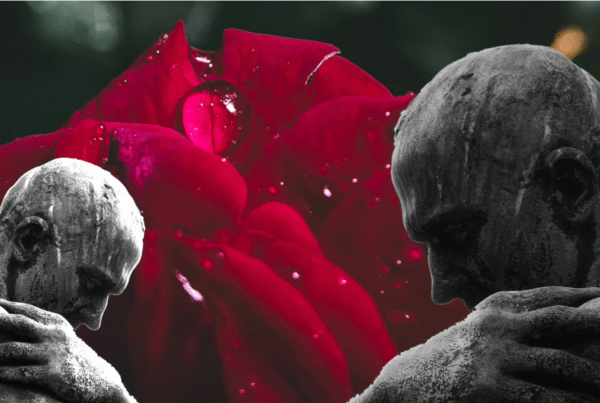

Introduction: Our Ache for the Ending
Every child knows the phrase before they can spell it. The last words of fairy tales arrive with the weight of magic: “And they lived happily ever after.” These words are not filler; they are the heartbeat of every story. They name what every human heart craves—an end to sorrow, permanence in joy, and a life where nothing precious is ever lost.
But reality seems to mock such dreams. The stories we live in this world seldom resolve with neat bows. Marriages falter. Children bury parents too soon. Bodies betray us. Nations crumble. History seems cyclical, not progressive. And in our modern, skeptical age, “happily ever after” is dismissed as childish illusion, fit only for bedtime but not for the serious business of living. Friedrich Nietzsche called Christian hope “the opium of the weak,” while Albert Camus urged us to embrace the absurd and imagine Sisyphus happy as he forever pushes his rock uphill. Modern secularism offers no fairy tale ending—only the cold silence of the grave.
And yet, the ache remains. Against all odds, men and women across cultures and centuries long for permanence in love, restoration after loss, and joy untainted by decay. Tolkien, who knew the blood-soaked trenches of the First World War, put into Sam Gamgee’s mouth the cry of the human heart: “Is everything sad going to come untrue?”
That question—posed to Gandalf at the climax of The Lord of the Rings—is not escapist fantasy. It is the deepest question of our existence. The gospel of Jesus Christ dares to answer it with a resounding “Yes.”
1. The Ache for Happily Ever After
To understand the gospel’s promise, we must first face the reality of our longing. We are creatures haunted by eternity. The Preacher in Ecclesiastes said it plainly: “God has put eternity into man’s heart, yet so that he cannot find out what God has done from the beginning to the end” (Eccl. 3:11). We cannot help but yearn for a story larger than ourselves.
Atheist philosophers have tried to suppress this longing. Nietzsche argued that humanity must outgrow illusions of heaven and instead embrace the will to power. Camus insisted that the only serious question is whether life is worth living in a meaningless universe. And yet, both could not entirely banish the echoes of transcendence. Nietzsche’s parables are shot through with mythic imagery; Camus ends his essay with Sisyphus smiling, a counterfeit “happily ever after” for a man condemned to futility. Even when denying it, the human spirit cannot escape its desire for lasting joy.
Fairy tales endure because they echo something truer than cynicism. They are not lies but shadows—traces of the gospel etched into cultural memory. Tolkien called this the “consolation of the happy ending,” the sudden joy that breaks through despair, which he named eucatastrophe. The greatest stories do not deny sorrow; they pass through it and end with joy beyond expectation. That pattern is not wish-fulfillment. It is a signpost pointing us to the true story of the world.
2. The Bible’s Story: From Sorrow to Joy
Scripture does not minimize sorrow. From the first sin in Eden, tears and death enter the world. The story of humanity is marked by exile, futility, and lament. Eve weeps over Abel’s death. Israel groans in Egypt. David floods his bed with tears. The prophets wail over Jerusalem’s ruin. The Bible is honest about the ache: our lives east of Eden are not fairy tales.
But sorrow is not the final word. The Old Testament whispers of a coming day when “He will swallow up death forever, and the Lord God will wipe away tears from all faces” (Isa. 25:8). Hope takes shape in the promise of Messiah, the one who would bear our griefs and carry our sorrows (Isa. 53:4).
In the New Testament, the turning point arrives with Christ. At Lazarus’s tomb, Jesus weeps (John 11:35). He does not dismiss sorrow; he enters it. And then he calls the dead man out, previewing the great reversal to come. The cross is the world’s darkest hour—mockery, nails, abandonment. Yet from that abyss rises the resurrection, the dawn of new creation. As Paul declares, “Christ has been raised from the dead, the firstfruits of those who have fallen asleep” (1 Cor. 15:20).
Here is the hinge of history: sorrow is real, but it is not ultimate. Christ has borne sin and death, and in rising, he inaugurates the ending every heart craves.
3. The Promise of New Creation
Nowhere does the Bible speak more directly to “happily ever after” than in the closing vision of Revelation. John sees the holy city descending, and he hears a loud voice declaring:
“Behold, the dwelling place of God is with man. He will dwell with them, and they will be his people, and God himself will be with them as their God. He will wipe away every tear from their eyes, and death shall be no more, neither shall there be mourning, nor crying, nor pain anymore, for the former things have passed away” (Rev. 21:3–4).
This is not vague comfort. It is a concrete promise: every sorrow undone, every tear touched by God’s own hand, death itself exiled from creation. Notice: it is not escape from this world into some ethereal cloudland. It is heaven come down, creation renewed, God with his people. The Garden becomes a city; the dwelling of God fills the earth.
John’s final chapter crescendos with Christ’s own words: “Surely I am coming soon.” The ache for resolution finds its answer not in human progress but in divine promise. The story ends not with “they lived” but with “he reigns.” And in his reign, we live forever.
4. The Backward Healing of Glory
But what of the wounds we carry now? What of traumas that scar memory, of losses that no future could erase? Here C. S. Lewis helps us. In The Great Divorce, he imagines a redeemed soul reflecting: “Some mortals say of some temporal suffering, ‘No future bliss can make up for it,’ not knowing that Heaven, once attained, will work backwards and turn even that agony into a glory.”
This is more than wishful thinking; it is biblical truth. Paul writes, “This light momentary affliction is preparing for us an eternal weight of glory beyond all comparison” (2 Cor. 4:17). He is not minimizing pain; he is relativizing it in light of eternity. Romans 8:18 is even bolder: “The sufferings of this present time are not worth comparing with the glory that is to be revealed to us.”
Lewis’s insight is that heaven does not merely outweigh suffering—it transforms it. Just as the cross, the worst evil, became the fountain of salvation, so too our wounds will one day be transfigured. Joseph could look back at betrayal and say, “You meant evil against me, but God meant it for good” (Gen. 50:20). That principle will hold true for every child of God.
In the new creation, we will not only be comforted after pain; we will see pain itself woven into a tapestry of glory. Every scar will shine. Every tear will be shown to have watered seeds of eternal joy. Nothing sad will remain sad; everything sad will come untrue.
5. The True Fairy Tale
This is why fairy tales are not escapist lies. They are echoes of reality. Tolkien, in his essay On Fairy-Stories, argued that the gospel is the “true myth.” Unlike invented tales, it happened in history—Christ was born, crucified, and raised. And yet, it carries all the features of the greatest fairy tales: peril, sorrow, sacrifice, and a sudden joyous turn. The resurrection is the eucatastrophe of the story of the world.
Richard Baxter, the Puritan pastor who lived with one foot in eternity due to lifelong illness, once wrote: “We will inherit the destiny to which all fairy tales pointed in fantasy—that we, foolish sinners, will live happily ever after. How amazing the Gospel is; that is glory indeed, and it will be because of Christ.”
Here is the wonder: what children dream in stories, God promises in Christ. The gospel is the fairy tale that came true.
6. Living in Light of Happily Ever After
If this is our ending, how should we live now? Scripture gives three clear implications.
a) Hope in Suffering.
Christians are not Stoics. We do not suppress grief; we weep with those who weep. But we grieve with hope (1 Thess. 4:13). Every funeral becomes a protest against death’s pretensions, a reminder that resurrection is coming. The martyrs under the altar cry out, “How long, O Lord?” (Rev. 6:10). Their cry is answered at the throne: “They shall hunger no more, neither thirst anymore… and God will wipe away every tear from their eyes” (Rev. 7:16–17).
b) Joy in Holiness.
If eternity is joy with God, then sin is always a counterfeit “happily ever after.” Lust promises intimacy but ends in loneliness. Greed promises abundance but ends in emptiness. Every temptation is a false fairy tale. Holiness, by contrast, is training for eternity. It is learning to love what lasts.
c) Urgency in Mission.
If Christ is coming soon, then our neighbors’ stories are rushing toward an ending. Not all endings are joyful. Revelation also speaks of the lake of fire, of exclusion from the city. To believe in heaven is also to tremble at hell. But this drives mission, not despair. The church is the outpost of happily ever after in a dying world. We are called to invite the nations: “Let the one who is thirsty come; let the one who desires take the water of life without price” (Rev. 22:17).
d) Comfort in Community.
Finally, the hope of happily ever after binds the church together. We are not isolated pilgrims; we are a bride awaiting her groom. When we gather, sing, and break bread, we taste the wedding supper to come. Every Sunday is rehearsal for the great feast.
Conclusion: Come, Lord Jesus
We began with Sam Gamgee’s question: “Is everything sad going to come untrue?” The gospel answers: yes, because Christ died and rose. Yes, because he will return. Yes, because the dwelling of God will be with man, and he will wipe away every tear.
C. S. Lewis imagined heaven working backward, transfiguring every sorrow into glory. Richard Baxter assured us that what fairy tales promised, the gospel secures. And John, on the Isle of Patmos, heard the voice of Jesus himself: “Surely I am coming soon.”
The last words of the Bible are not “The End,” but “Come, Lord Jesus.” That is our happily ever after. And it will not be because of our strength or worthiness, but because of Christ, who loved us to the end and will love us into eternity.
So we wait, we hope, we ache, and we sing. And when the day comes, we will see with our own eyes that every sad thing has become untrue, every tear has been wiped away, and the story has only just begun.
This article first appeared on https://dansonottawa.substack.com/p/happily-ever-after-the-gospels-final